概述
本文档主要介绍 LangChain4j 中流式(Stream)调用场景下,Tool 工具的调用机制及其前后钩子(Hook)的处理流程。
Tool 调用触发时机
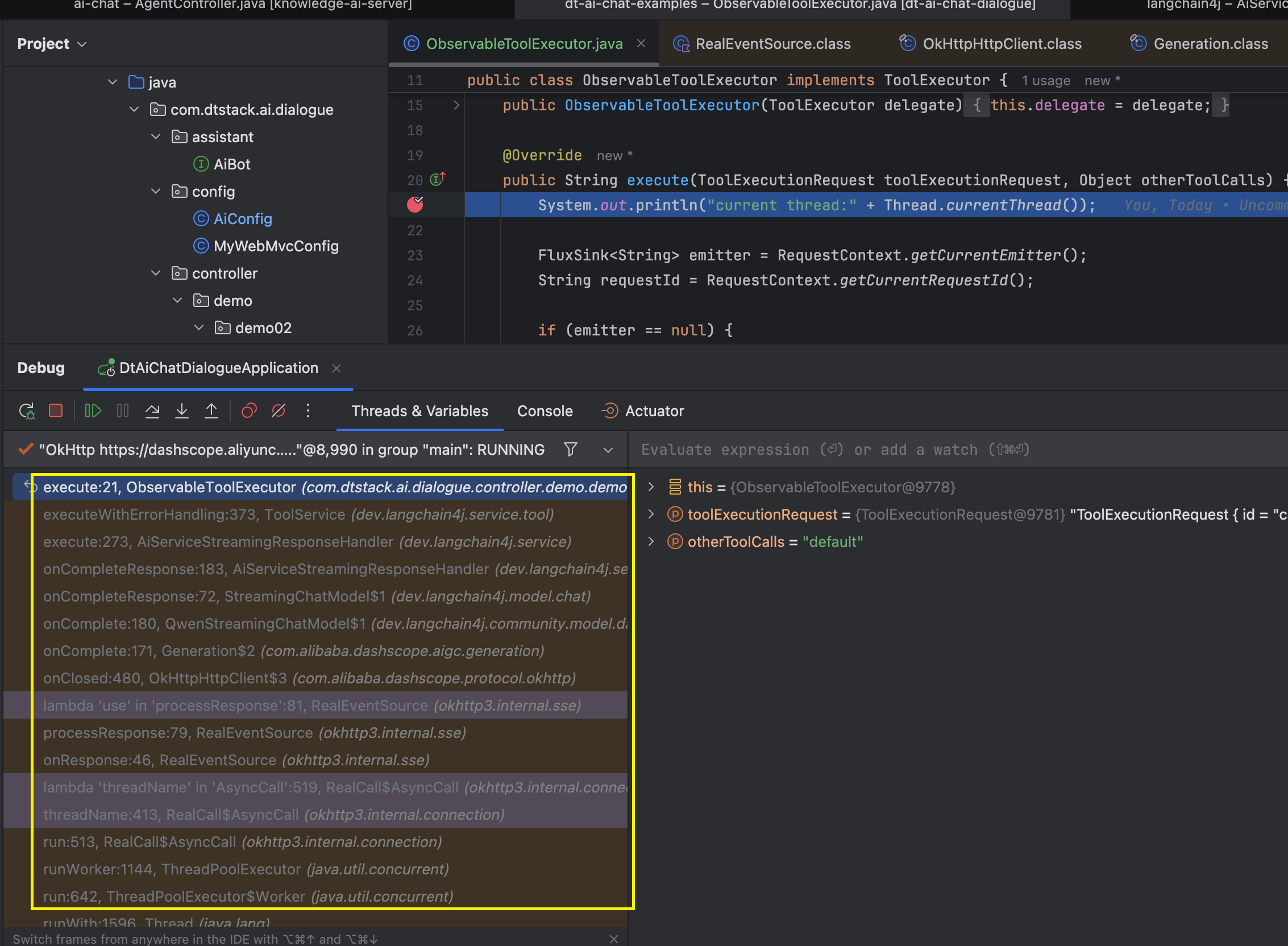
调用链路追踪
Tool 调用在流式场景中的触发时机如下:
QwenStreamingChatModel#generateByNonMultimodalModel
  └─ QwenStreamingChatModel#chat [StreamingChatResponseHandler#onCompleteResponse]
       └─ 透传到 LangChain4j 中的自定义 Handler
            └─ AiServiceStreamingResponseHandler#onCompleteResponse
调用流程示意图
ToolExecutor 执行逻辑
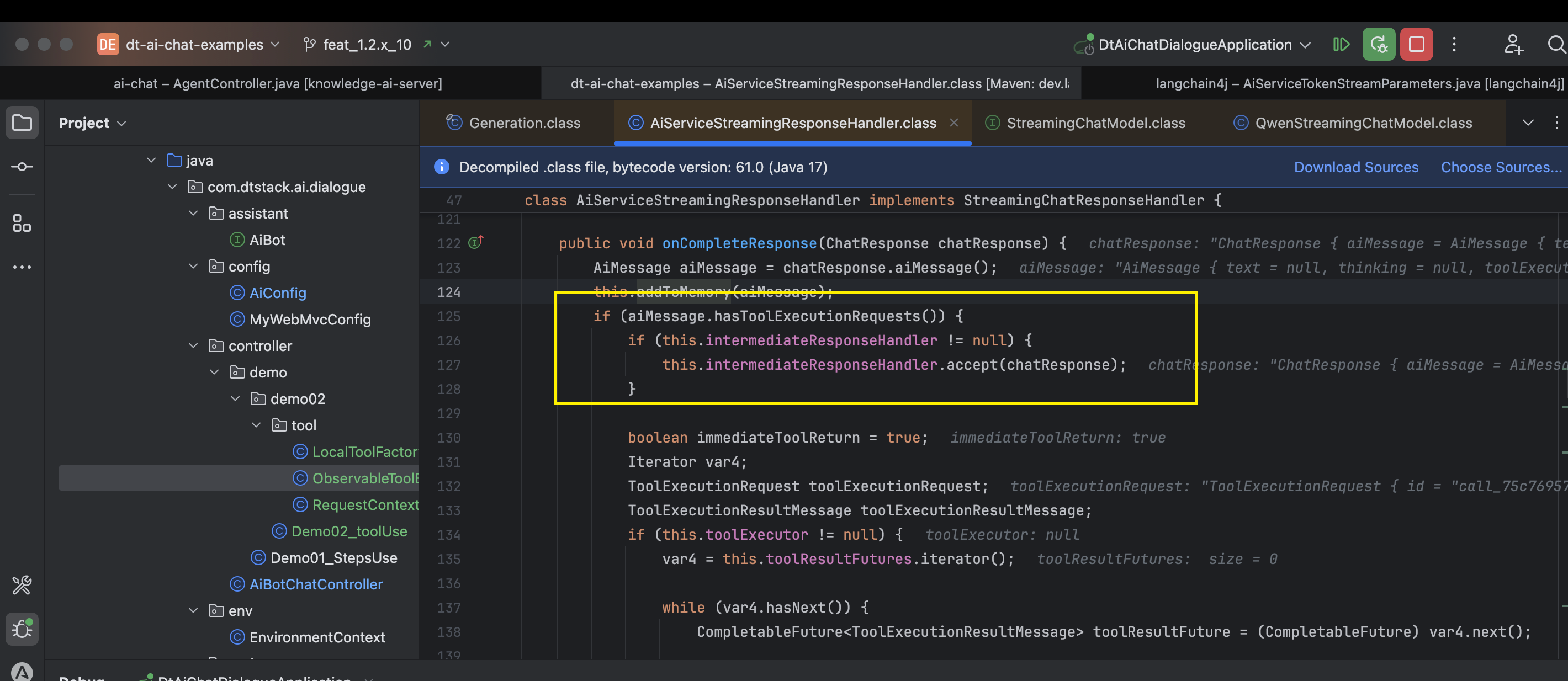
onCompleteResponse 方法
Tool 的实际执行逻辑位于 AiServiceStreamingResponseHandler#onCompleteResponse 方法中:
public void onCompleteResponse(ChatResponse chatResponse) {
    // ... 省略部分代码

    if (toolExecutor != null) {
        // 异步执行模式下获取结果
        for (CompletableFuture<ToolExecutionResultMessage> toolResultFuture : toolResultFutures) {
            try {
                ToolExecutionResultMessage toolExecutionResultMessage = toolResultFuture.get();
                addToMemory(toolExecutionResultMessage);
            } catch (InterruptedException | ExecutionException e) {
                throw new RuntimeException(e);
            }
        }
    } else {
        // 同步执行模式
        for (ToolExecutionRequest toolExecutionRequest : aiMessage.toolExecutionRequests()) {
            // 本质就是找到指定的ToolExecutor来进行任务执行
            String toolResult = execute(toolExecutionRequest);
            addToMemory(ToolExecutionResultMessage.from(toolExecutionRequest, toolResult));
        }
    }

    // 构建新的请求,继续对话
    ChatRequest chatRequest = ChatRequest.builder()
            .messages(messagesToSend(memoryId))
            .toolSpecifications(toolSpecifications)
            .build();

    // 创建新的响应处理器
    var handler = new AiServiceStreamingResponseHandler(
            chatExecutor,
            context,
            memoryId,
            partialResponseHandler,
            partialThinkingHandler,
            beforeToolExecutionHandler,
            toolExecutionHandler,
            intermediateResponseHandler,
            completeResponseHandler,
            errorHandler,
            temporaryMemory,
            TokenUsage.sum(tokenUsage, chatResponse.metadata().tokenUsage()),
            toolSpecifications,
            toolExecutors,
            toolExecutor,
            commonGuardrailParams,
            methodKey);

    // 最终本质依旧使用streamchatmodel来进行chat问答 & handler后续处理器
    context.streamingChatModel.chat(chatRequest, handler);
}
Tool 前后钩子机制
execute 方法
private String execute(ToolExecutionRequest toolExecutionRequest) {
    ToolExecutor toolExecutor = toolExecutors.get(toolExecutionRequest.name());
    // TODO applyToolHallucinationStrategy
    // 前置tools执行
    handleBeforeTool(toolExecutionRequest);
    String toolExecutionResult = toolExecutor.execute(toolExecutionRequest, memoryId);
    // 后置tools执行
    handleAfterTool(toolExecutionRequest, toolExecutionResult);
    return toolExecutionResult;
}
前置钩子 handleBeforeTool
private void handleBeforeTool(ToolExecutionRequest toolExecutionRequest) {
    if (beforeToolExecutionHandler != null) {
        BeforeToolExecution beforeToolExecution = BeforeToolExecution.builder()
                .request(toolExecutionRequest)
                .build();
        beforeToolExecutionHandler.accept(beforeToolExecution);
    }
}
后置钩子 handleAfterTool
private void handleAfterTool(ToolExecutionRequest toolExecutionRequest, String toolExecutionResult) {
    if (toolExecutionHandler != null) {
        ToolExecution toolExecution = ToolExecution.builder()
                .request(toolExecutionRequest)
                .result(toolExecutionResult)
                .build();
        toolExecutionHandler.accept(toolExecution);
    }
}
Handler 初始化机制
初始化位置
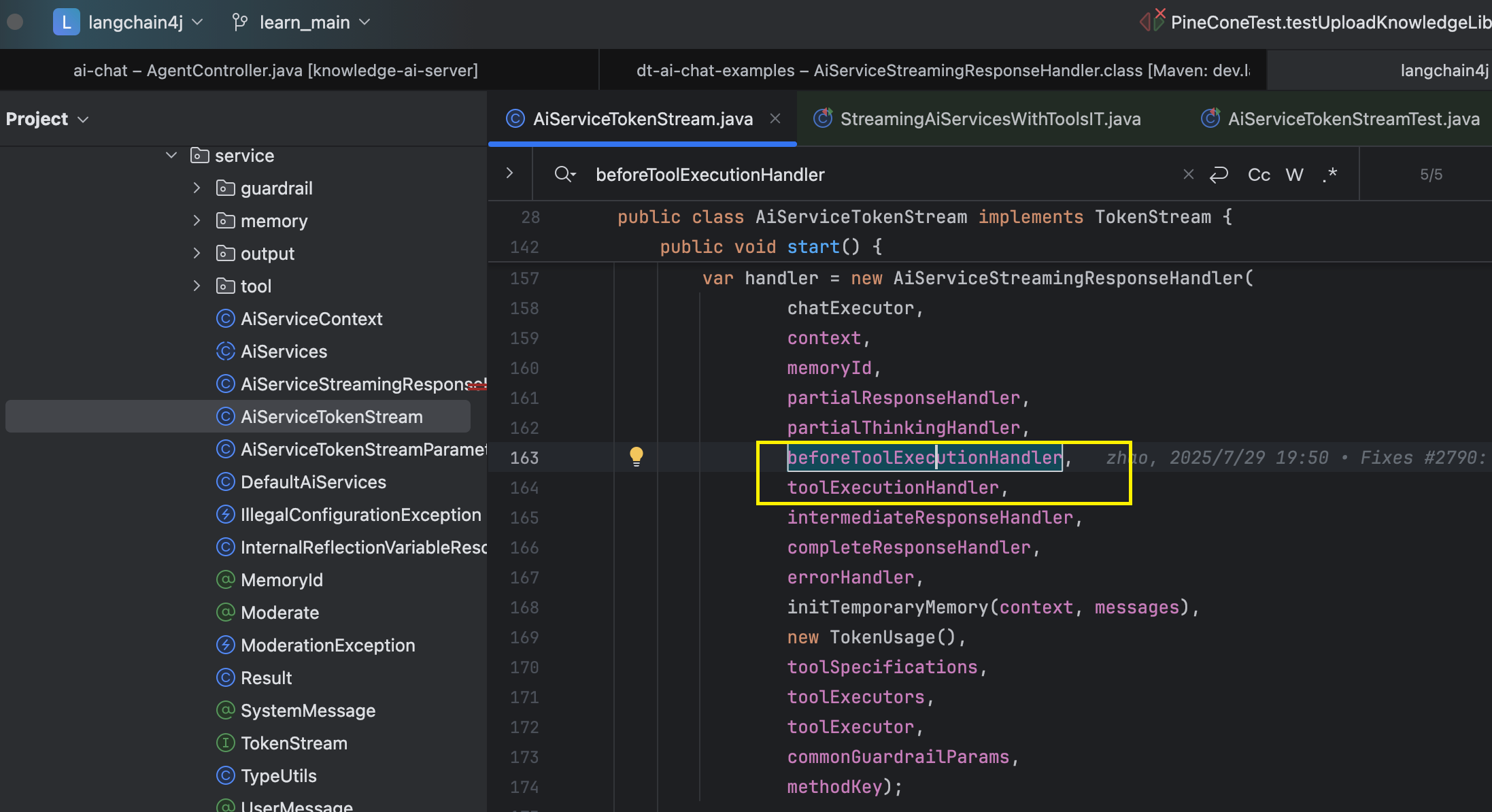
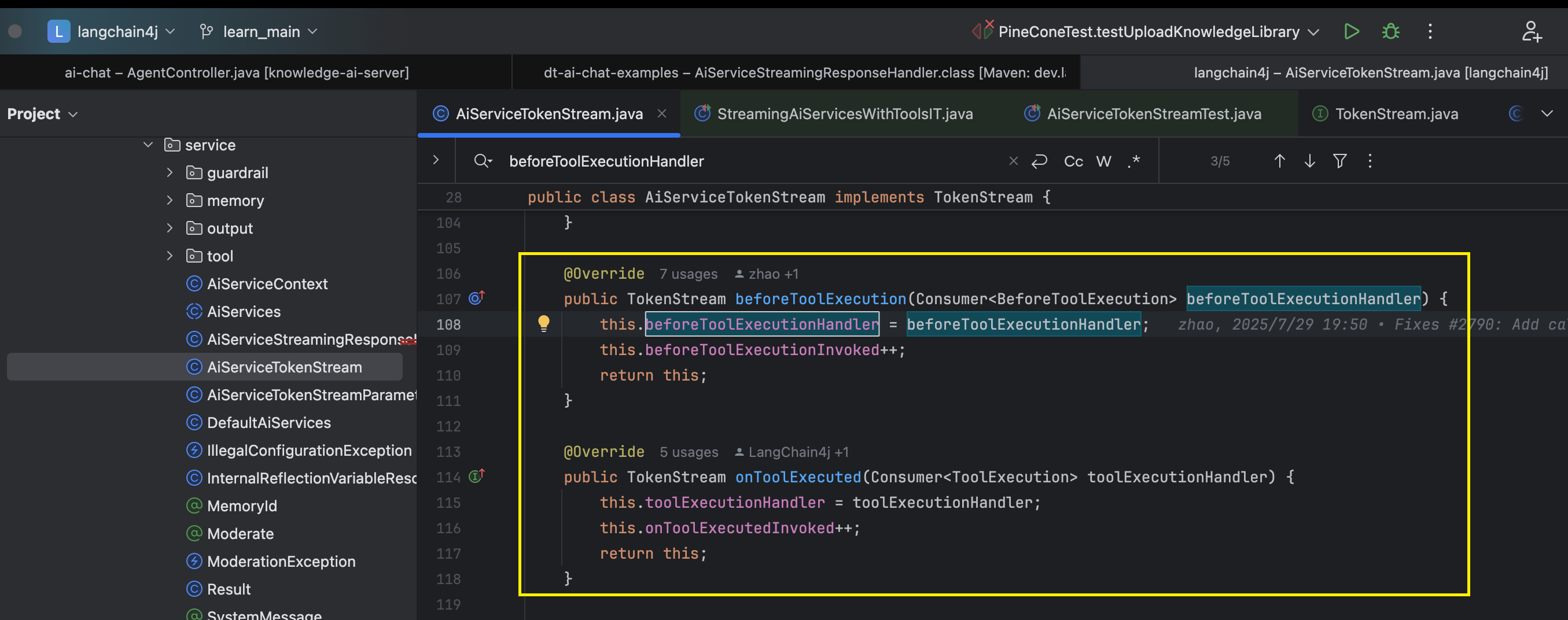
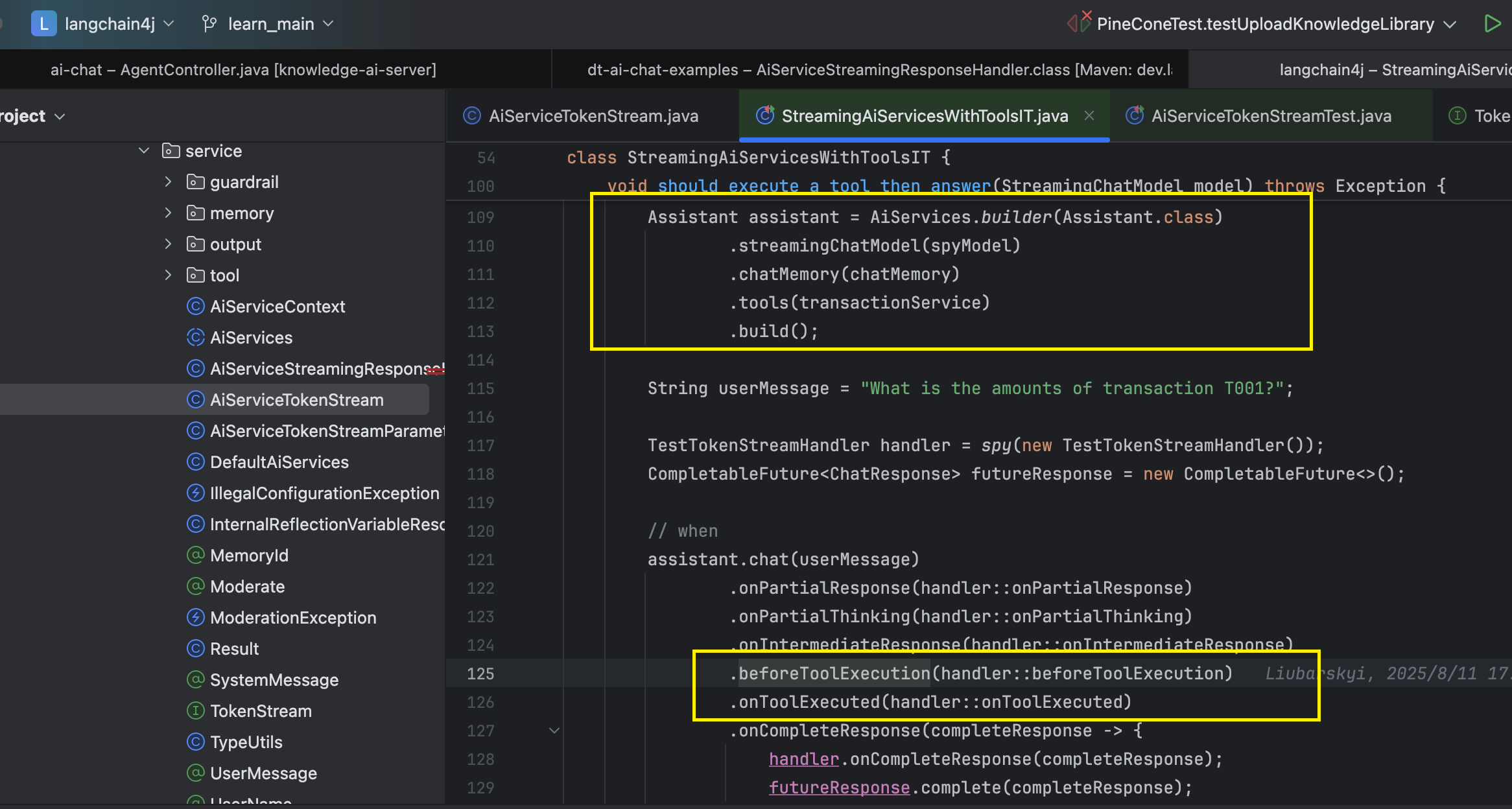
toolExecutionHandler 和 beforeToolExecutionHandler 这两个处理器是在 AiServiceTokenStream 中进行初始化的。
AiService 接口定义
interface Assistant {
    TokenStream chat(String userMessage);
}
总结
LangChain4j 在流式调用场景下,通过 AiServiceStreamingResponseHandler 实现了 Tool 的调用及其前后钩子机制:
- 触发时机:在流式响应完成的
onCompleteResponse回调中触发 - 执行模式:支持同步和异步两种执行模式
- 钩子机制:提供
beforeToolExecutionHandler和toolExecutionHandler两个钩子用于前后置处理 - 循环调用:Tool 执行完成后会将结果加入内存,并继续发起下一轮对话
整理者:长路 时间:2025.9.27
评论区请在客户端页面查看